Digging into Canadian Soils (an introduction to soil science)
(openpress.usask.ca)
3
8
Soil health assessment using buried cotton underpants with the help of 1000 citizen scientists
(nph.onlinelibrary.wiley.com)
4
34
A spodsolic profile in miniature
(lemmy.nz)
Pedologists often lay out soil from each horizon like this for great profile overviews, even though the horizons are thicker

5
24
A fragipan spodsol from West Virginia
(lemmy.nz)
Check out the coarse prismatic structure of the fragipan (water impermeable layer). This is caused by movement of aluminum, iron, and clay and recementation from available silicon. Freeze thaw cycles also play a large role.


9
10

11
28

13
21
Why too much phosphorus in America’s farmland is polluting the country’s water
(theconversation.com)
14
26
Tanzania is losing fertile land to soil erosion: what’s happening and what can be done
(theconversation.com)


20
13
Spodzol in Rode Island on Ablation till
(lemmy.nz)

This profile has ice wedges that melted you can see them in this second picture. Textures are sandy loam over loamy sand, but the wedges are filled in with silt or finer


22
36
Backyard Layers
(lemmy.nz)
I thought this community might enjoy seeing the layers i found while digging a pond in my yard. Depth is about 2 feet.


25
11
Typic Haplocryod
(lemmy.nz)

In the Canadian system, this would be a Eluviated District Brunisol. Note the two E horizons - this is referred to as a bisequa soil, where the original profile is buried and then pedogenesis begins again and forms a mini profile over the buried one.
Canadian description would be:
Om Ae Bm IIAeb IIBm II C

view more: next ›
Soil Science
852 readers
1 users here now
Welcome to c/soilscience @ slrpunk.net!
A science based community to discuss and learn all things related to soils.

Notice Board
This is a work in progress, please don't mind the mess.
Subdisciplines of soil science include:
- Soil Taxonomy & mapping
- Soil Fertility & Organic Amendments
- Soil Chemistry & Remediation
- Soil Mineralogy
- Soil Physics
- Soil Biology
These subdisciplines are used by various other disciplines, particularly those related to reclamation, remediation, and agriculture.
Rules
- Don't throw mud. Be kind and remember the human.
- Keep it rooted (on topic).
- Please use a tag.
- No spam.
- Memes are welcome, but the focus of this community is science-based
Resources
Blogs
Careers
Chemistry
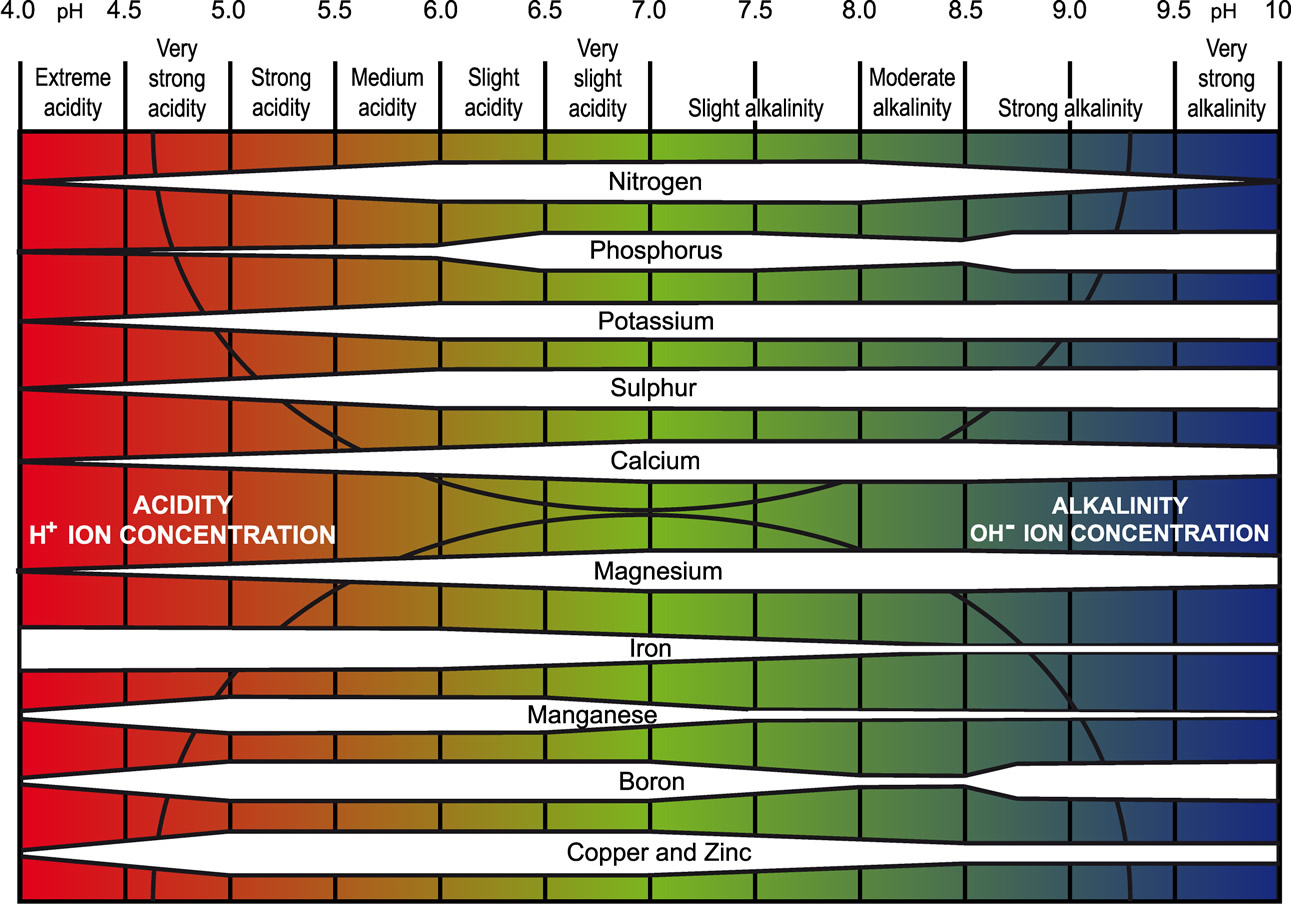
- Secondary and micronutrient availability by pH
- Secondary and micro nutrients availability by pH line graph
- Common Nutrient Deficiency Symptoms on Leaves Infographic

Classification
Maps & Datasets
Canada
- Canadian System of Soil Classificaiton
- 1982 Canadian Manual for Describing Soils in the Field
- Alberta Soil Quality Criteria Relative to Disturbance this one is widely used across Canada
- Best management practices for conservation of reclamation materials in the mineable oil sands region of Alberta - a good guide to basic reclamation and revegetation BMPs
Europe
- Agrifood Soilscapes (UK)
- Datasets from the BGS (UK)
- Datasets from the James Sutton Institute (UK)
- Scotland Environment Soil Maps
- Soil Atlas of Europe
- UK Geochemical Atlas
- UK Soil Observatory
United States
World
Soil Contamination:
- Cornell Guide to Testing Contaminated Soils
- CCME Soil Guidelines for Contaminants
- Wikipedia Lists of Hyperaccumulators for Bioremediation

Similar Communities
- !geology@lemmy.ca
- !geophysics@lemmy.ca
- !geologycareers@lemmy.ca
- !mining@lemmy.ca
- !openscience@lemmy.ml
- !reclamation@slrpnk.net
Sister Communities
Science and Research
Biology and Life Sciences
- !anthropology@mander.xyz
- !microbiology@mander.xyz
- !biodiversity@mander.xyz
- !palaeoecology@mander.xyz
- !palaeontology@mander.xyz
Plants and Gardening
Physical Sciences
Humanities and Social Sciences
- !archaeology@mander.xyz
- !cooking@mander.xyz
- !folklore@mander.xyz
- !history@mander.xyz
- !old_maps@mander.xyz
Memes
Find us on Reddit
founded 3 years ago
MODERATORS