1951
-42
submitted 2 years ago* (last edited 2 years ago) by modev@snac.bsd.cafe to c/programming@programming.dev

@programming@programming.dev Why is C hidden gold?

Let's say you decide to learn programming. You have two options. Either use the education system (college or courses) or become self-taught. In the first case, you will learn the programming languages that are imposed on you. The education system (universities, colleges, courses) uses the "modern" development stack. Because what matters to them is what can later bring income to companies and you in life, and taxes to the state. They are part of the system and that's how it works. Or because they want to get certificates from industry giants and use everything in their implementation - from development tools to ideology. Only a very few colleges and courses specializing in a very narrow field, such as embedded devices, can teach you the C language.

If you choose to learn programming on your own, the first thing you will do is go to the Internet to determine where to start and what you need to learn today. Naturally, you will find there a lot of articles and posts on the topic of "what programming language to learn in X year". And they will contain a detailed or not very detailed comparison of “modern” languages. But you are unlikely to find the C language among them. Moreover, almost all of these languages will have the intention of being “C replacements”. Naturally, you will choose a new, powerful, and promising language that will replace the “dying C”, while you “look to the future”. You will never find phrases like “Rust is a replacement for Zig” or vice versa, they will all be “replacements for C”. And by doing this they are trying to hide the C language.
We have seen why the C programming language is hidden.

But suddenly one wonderful day you came across a post with the words “give C language a try”, or, if you are over 40, you remembered where you started learning programming as a child before you started writing all this “SaaS garbage”. And you thought “well, okay, what if there is something, here is nothing to lose anyway”. And you started learning C, simultaneously integrating into the C community. And then you discover, to your surprise, that the C language is simple and effective, applicable everywhere, and continues to develop. And the community is kind, not pompous, without hype, and buzzing with interesting projects. You realized that the C language is not dying and is not going to die, as the "gurus" on youtube taught you and representatives of the "modern" language communities argued with foam at the mouth. And that it is unlikely that C will be able to replace anything in the near future. It's as if you have found "your home" again, something you have been looking for a long time, but could not express in words. You have returned to the roots.
And this is why the C language is gold.

Look for your "gold", never give up. When you find it, you will know for sure that this is it. Thanks for reading!
1952
27

I'm a newbie to ActivityPub so please be patient with me.

All intros into ActivityPub speak about how a user of a server A subscribes to a specific community from server B, and then server A will be informed about changes in that community.

But on lemmy it's possible to look at the posts of all communities. For a single concrete community it would be relatively easy: server A gets the request to serve the top post of a community on server B, so A simple asks B for the posts.

But there is also the "posts from all communities" tab on the lemmy front page. This opens questions:

Does each lemmy instance has a full copy of all posts of all communities? If this is true: How are new Instances discovered? Is each Instance distributing all updates to all other Instances?

If each lemmy instance has only a partial dataset (this theory is backed by [1] "Only if a least one user on your instance subscribes to the remote community, will the community send updates to your instance.") then how is the "all posts" view composed? is it in reality not "all" but only "all posts that at least one user of this instance is subscribed to"?

If this is the case: what happens if a bad actor subscribes to all communities of all servers? Is there a maximum number of subscriptions per user?

The source of those questions is, that I'm looking for a way to subscribe to all events of all lemmy instances, to be able to build statistics about upvotes, new posts, comments etc. There seems to be a similar API endpoint for mastadon [2] but nothing for lemmy?!

1953
43
1954
28
Good Computer Handbooks (programming.dev)

I went to my local library today and noticed there's a lot of networking, cybersecurity, tcp/ip books from the early 2000s. Now, I want more modern versions of these types of handbooks. Does anyone know any good modern handbooks that deal with networking or network security standards?

Thanks :)

1955
46

From the repo

A (somewhat opinionated) list of SQL tips and tricks that I've picked up over the years in my job as a data analyst.

1956
26
Sidekick (github.com)

This looks pretty cool for quick deployment of hobby projects. Production grade and easy to use is always a win in my book.

1957
176
1958
559

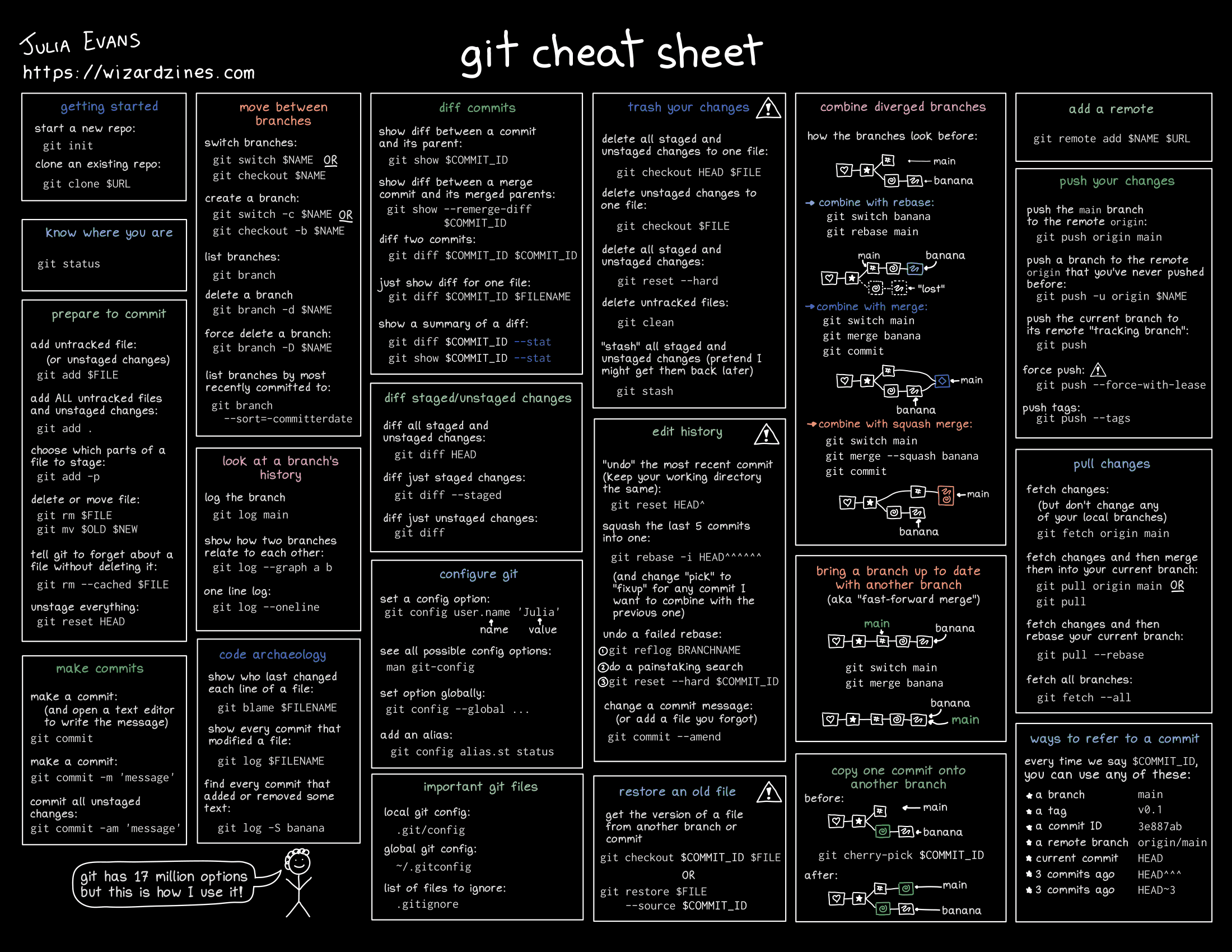
Git cheat sheets are a dime-a-dozen but I think this one is awfully concise for its scope.

  • Visually covers branching (WITH the commands -- rebasing the current branch can be confusing for the unfamiliar)
  • Covers reflog
  • Literally almost identical to how I use git (most sheets are either Too Much or Too Little)
1959
87
1960
85

You can now inspect the DOM tree, view styles, evaluate JavaScript, and read console messages in Servo!

1961
5

I have a .Net Core (ver 8.0) multiproject solution which uses a native library on linux (.so).

When I start the project with debugger on, the program exits with code 0 and without any messages when hitting the line which loads the library.
Without the debugger, it runs without issues.

So does somebody know how I can get debugging to work?

1962
65

Hey all, I'm still a junior dev with years of experience in IT. One of the things I've noticed since making the switch is that (at least where I work) documentation is inconsistent.

Things I encounter include incomplete documentation, outdated documentation and written process details that have assumed knowledge which makes it difficult for junior Devs to pick up.

I've had a search and a lot of what is out there talks more about product and how to document that SDLC rather than best practice in writing and organising documents against the actual software engineering and its processes.

Does anyone have any good sources or suggestions on how I could look to try and begin to improve documentation within my team?

1963
35

I figured out how to remove most of the safeguards from some AI models. I don't feel comfortable sharing that information with anyone. I have come across a few layers of obfuscation to make this type of alteration more difficult to find and sort out. This caused me to realize, a lot of you are likely faced with similar dilemmas of responsibility, gatekeeping, and manipulating others for ethical reasons. How do you feel about this?

1964
52
1965
171
1966
201

The really interesting part is IMO this one:

1967
73

Sorry for the somewhat noob question, but how do you pick a library for making a GUI for your apps? My background is in physics, so most of my programming is perfectly find with a CLI that outputs a graph as a ps file or some csv. I am looking to learn about making some neat little GUIs. I was thinking it would be a good idea to try and build my GUI out of the browser so that my app can be as portable as possible, but does this mean it has to be in Javascript or can the backend be done in anything else?

I am not really sure what I am asking, but wanted to get a feel for how people approach front ends.

Thanks :)

1968
11

cross-posted from: https://lemmy.world/post/19949534

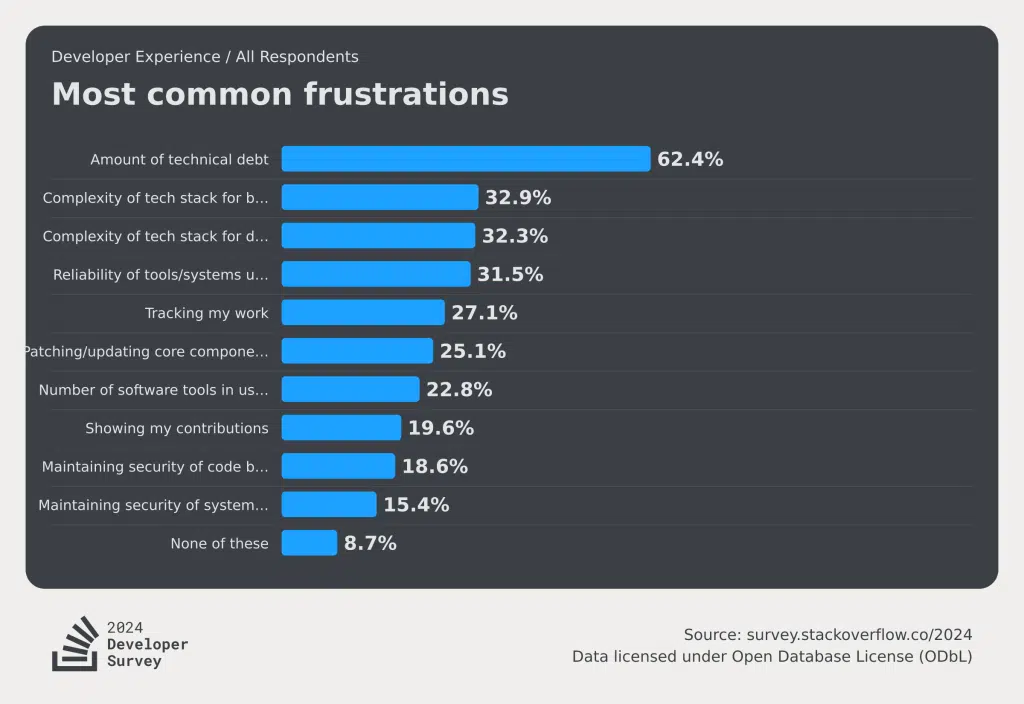
Interesting distribution of OSes from Stack Overflow.

1969
14

https://positive-intentions.com/blog/dim-functional-webcomponents/

im investigating an idea i have about functional webcomponents after some experience with Lit.

Lit is a nice lightweight UI framework, but i didnt like that it was using class-based components.

Vue has a nice approach but i like working with the syntax that React used and i wondered if with webcomponents i could create a functional UI framework that didnt need to be transpiled.

i think the article is already quite long, so i think i will create a separate one as a tutorial for it.

note: im not trying to push "yet another ui framework", this is an investigation to see what is possible. this article is intended as educational.

1970
88

Hello! I’m looking for book recommendations for learning programming fundamentals.

To be clear, I’m not necessarily looking for a book on learning language(s), but rather, programming, theory I guess you might call it?

For example, I’ve been playing around a lot in my terminal writing bash scripts, and I just implemented my first function. Another example, I know the phrase “Object Oriented programming”, but have no idea what it means.

I learn well by doing, and I’ve learned a lot just writing scripts and reading about bash scripting, but I also realize there’s a lot about programming at a higher level that I know nothing about.

1971
42
1972
58
submitted 2 years ago* (last edited 2 years ago) by mesamunefire@lemmy.world to c/programming@programming.dev

For the last 5(?) years or so I have been using GitKraken as my daily git driver for a while. I use it at my job mostly and love the functionality. I still use git via command line but jumping into git bash is nice no matter what os I am currently using.

I mainly use it:

  1. To see what branches have been modified (same as git tree but updates itself).
  2. Hooks into other git hosting like codeberg/gitea/forgeo without any real work. Login is also super easy and built in. Oauth is built in.
  3. Git amend is a one click interface.

There is other niceties like issue tracking, easy auto-creation of branches, etc... that I personally don't use all that much, but I can see the appeal.

The only real issue is the price. It used to be 30$ a year but now it's over 100+. I would happily pay 30 a year or pay one time for a license...but over 100 is too much in my opinion. I may go back to using all command line if the price keeps going up.

Is there any open source tools that do something similar it's the same look/feel?

1973
19

A great introduction to what traces and spans are, how they work, and the OpenTelemetry Protocol

1974
16

When managing a database, speed and efficiency are crucial. As applications handle more data and become more complex, the performance of database queries plays a big role in keeping everything running smoothly. One of the best ways to make queries faster is by using indexes. Similar to a book’s index that helps you quickly find a topic, database indexes allow you to find specific data without searching through the entire database. This article explains the basics of indexing, how it improves query performance, and some simple tips for using indexes effectively. Whether your database is small or large, understanding how to use indexes can help keep your application fast and responsive.

1975
63
Announcing Swift 6 (www.swift.org)
submitted 2 years ago* (last edited 2 years ago) by popcar2@programming.dev to c/programming@programming.dev

The big thing about this release is it is a huge leap forward to making Swift a cross-platform language, and not something only built for Mac/iOS

Swift 6 unifies the implementation of Foundation across all platforms. The modern, portable Swift implementation provides consistency across platforms, it’s more robust, and it’s open source. macOS and iOS started using the Swift implementation of Foundation alongside Swift 5.9, and Swift 6 brings these improvements to Linux and Windows.

Swift is designed to support development and execution on all major operating systems, and platform consistency and expansion underpins Swift’s ability to reach new programming domains. Swift 6 brings major improvements to Linux and Windows across the board, including support for more Linux distributions and Windows architectures. Toolchains for all of the following platforms are available for download from Swift.org/install.

view more: ‹ prev next ›

Programming

28322 readers
691 users here now

Welcome to the main community in programming.dev! Feel free to post anything relating to programming here!

Cross posting is strongly encouraged in the instance. If you feel your post or another person's post makes sense in another community cross post into it.

Hope you enjoy the instance!

Rules

Rules

  • Follow the programming.dev instance rules
  • Keep content related to programming in some way
  • If you're posting long videos try to add in some form of tldr for those who don't want to watch videos

Wormhole

Follow the wormhole through a path of communities !webdev@programming.dev


founded 3 years ago
MODERATORS