I'm pretty new to selfhosting and homelabs, and I would appreciate a simple-worded explanation here. Details are always welcome!
So, I have a home network with a dynamic external IP address. I already have my Synology NAS exposed to the Internet with DDNS - this was done using the interface, so didn't require much technical knowledge.
Now, I would like to add another server (currently testing with Raspberry Pi) in the same LAN that would also be externally reachable, either through a subdomain (preferable), or through specific ports. How do I go about it?
P.S. Apparently, what I've tried on the router does work, it's just that my NAS was sitting in the DMZ. Now it works!
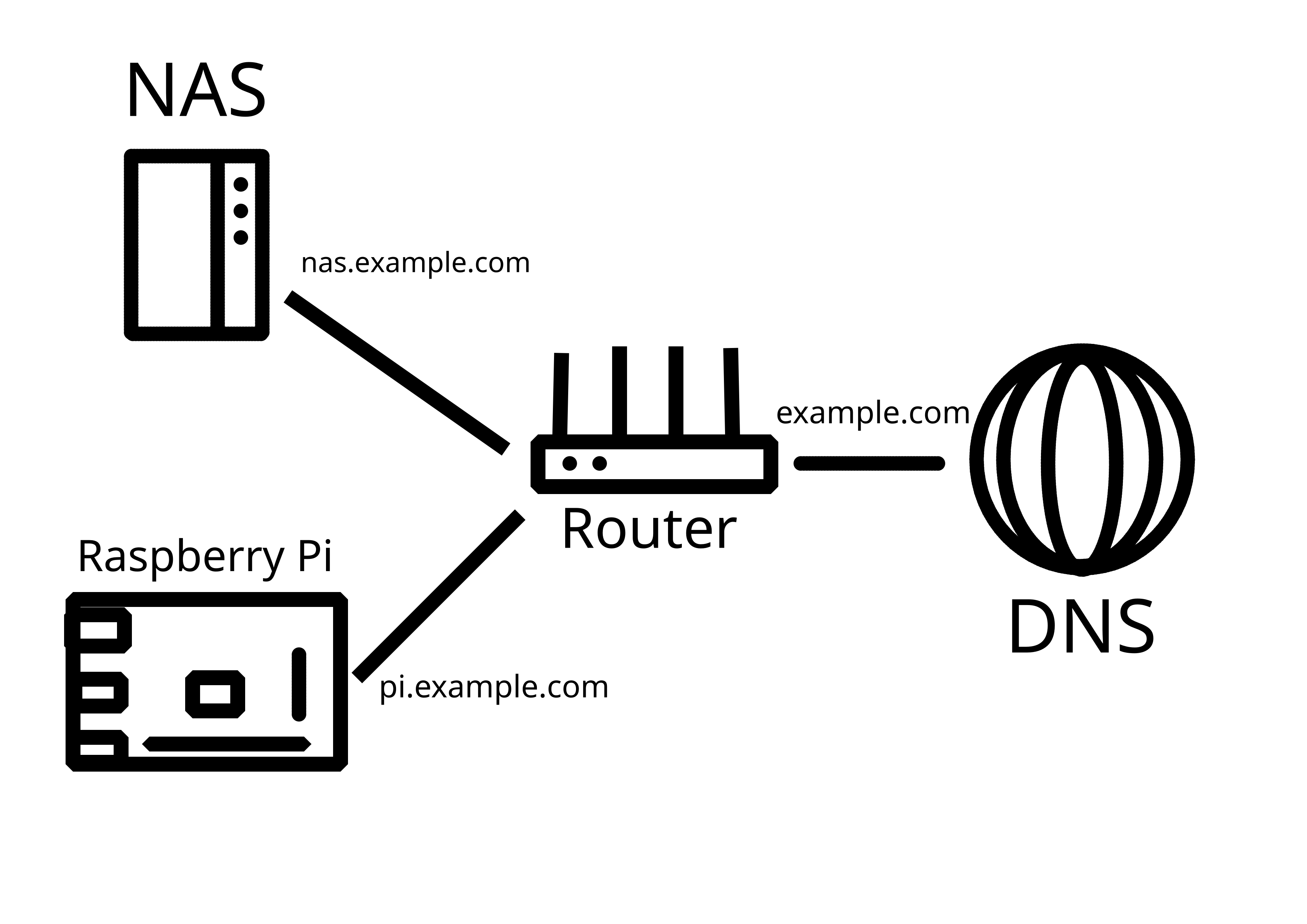
If you go with IPv6, all your devices/servers have their own IP. These IPs are valid in your LAN as well a externally.
But it's still important to use a reverse proxy (e.g. for TLS).
Oh, nice! So I don't have just one, but many external IPs, one for every local device?
Yes, even IPv4 was intended to give each device in the world their own IP, but the address space is too limited. IPv6 fixes that.
Actually, each device usually has multiple IPv6s, and only some/one are globally routable, i.e. it works outside of your home network. Finding out which one is global is a bit annoying sometimes, but it can be done.
Usually routers still block incoming traffic for security reasons, so you still have to open ports in your router.
Nice to know!