1
Sorry. I forgot about we were ending daylight savings this past weekend, so the times are actually GMT+10 now.
Sorry. I forgot about we were ending daylight savings this past weekend, so the times are actually GMT+10 now.
Sorry. I forgot about we were ending daylight savings this past weekend, so the times are actually GMT+10 now.
I wasn't going to reply any more, but I see now you don't understand terms either, so one more time for old time's sake (and maybe you might finally get it)...
perhaps you have sunk so much time
You know teachers don't get paid for helping students outside class time right?
assume I must be wrong
No assumption needed. What you are proposing is literally impossible. I've been saying that all along.
Take another look at my third and fifth paragraphs.
Ok...
I’m not saying you can take any expression and get the same answer by doing addition before multiplication
And so far you haven't been able to show it works for any expression at all! Not even one expression! Just like I said would happen.
All I am saying is that you can still use numbers to solve problems with an altered order of operations
And I said you can't, and you haven't! All you did was put brackets around the multiplication to make sure we were still following the only order of operations that works! You have still not shown an actual instance where one can actually do addition first and get a right answer, not one! The idea that one could use addition first as an "alternate order of operations" is thus pure fantasy, just like I've been saying all along. It's literally impossible.
for example (x+4)(x-2) would no longer need brackets
Yes it would! (x+4) is one term - that's what the brackets means - "these things are all together". If you remove that, because "addition first", it's now two terms, so the whole expression is two terms (instead of one), x, and 4(x-2) (which is a mistake people make when they write 8/2(2+2) as 8/2x(2+2) - just turned 2 terms into 3 terms and changed the answer!). Every example you've done so far you've used brackets to escape from having to do addition first, and the very same thing would therefore apply here - no brackets, no escaping "addition first" approach, brackets before addition leads to x+4(x-2)=x+(4x-8) =5x-8, which is not the product of (x+4) and (x-2).
The presence of brackets where there would be none otherwise does not invalidate my point
No, the fact that you've not been able to show a single instance of where addition before multiplication would work does. You can't show "a way to solve this in an addition first world" when it's literally impossible for an "addition first world" to exist in the first place.
I never wrote 15²+50²
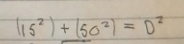
...and I removed the brackets to show that addition first doesn't work (since you keep putting in brackets to revert "addition first" back to the only order of operations that actually works).
It can still be used to “study of the measurement, properties, and relationships of quantities and sets using numbers and symbols”
And you've still not shown how. Every example you've used so far you've put in brackets to your (supposed) "addition first" so that we were evaluating it using the only order of operations that works. In other words, no, you can't use "addition first" to “study of the measurement, properties, and relationships of quantities and sets using numbers and symbols” - you used the regular order of operations to do it! You haven't shown a single example of where addition first could be used to do it.
you need to use that order of operations
You need to use an order of operations that gives a correct answer, of which there is only one - a fact you keep trying to avoid.
different order of operations and a+2xa-2 simplifies to a^2-4
No it wouldn't, cos now you're ignoring terms as well. As per my earlier working out, it would simplify to 5x-8 unless you also changed the definition of terms. Do you see yet why it's impossible to have an "alternate order of operations"?
All I am trying to say is that that their math, with a different order of operations, would be no less useful then our math
And you've completely failed to show a single instance where this is true - which is what I've been saying all along, it's impossible to have another set of order of operations that works. You keep pre-supposing it's possible, but then add brackets to the multiplications so that we follow the actual correct order of operations, the only order of operations that works.
my only claim is that you can still use a different order of operations to manipulate numbers and solve real world problems
And you've still failed to solve a single problem using addition first, because it's still a fact it's literally impossible to do so.
was still able to come to the correct answer
by using the only order of operations that works. i.e. multiplication before addition.
Now I really am done - I'm not going any further down this rabbit hole of whatever other Maths you may not understand either (this post it was Terms - who knows what's next)...
it’s (8 / 2) * 4
It's 8/2(2+2)=8/(4+4) or 8/2(2+2)=8/2(4)=8/(2x4)
I’m talking about the classic 4/2x. If x = 2, it is:
4/2x2 = 2x2 = 4
4/(2x2) = 4/4 = 1
It's the latter, as per the definition of Terms. There are references to this definition being used going back more than 100 years.
Wolfram solved this with going with the second if it is an X or another variable as it’s more intuitive
Yes, they do if it's 2x, but not if it's 2(2+2) - despite them mathematically being the same thing - leading to wrong answers to expressions such as the OP. In fact, that's true of every e-calculator I've ever seen, except for MathGPT (Desmos used to handle it correctly, but then they made a change to make it easier to enter fractions, and consequently broke evaluating divisions correctly).
how do you calculate 2(1+1)? It’s 4. It’s called implicit multiplication
No, it's not called implicit multiplication. It's distribution.
We could write this up as +2*(+1+(+1))
No, you can't. Adding that multiplication has broken it up into 2 terms. You either need to not add the multiply, or add another set of brackets if you do, to keep it as 1 term.
I can’t think of a situation where it’s incorrect
If a=2 and b=3, then...
1/axb=3/2
1/ab=(1/6)
If there is a letter or number or anything next to a bracket, it’s multiplication
No, it's distribution. Multiplication refers literally to multiplication signs, of which there aren't any in this expression.

2x is the same as 2*x
No, 2A is the same as (2xA). i.e. it's a single Term. 2xA is 2 Terms (multiplied).
If a=2 and b=3, then...
axb=2x3 (2 terms)
ab=6 (1 term)
This guy talks in hashtags.
Only in the first post in each thread, so that people following those hashtags will see the first post, and can then click on it if they want to see the rest of the thread. Also "this guy" is me. :-)
Grab a calculator, look at wolfram docs, ask a professor or teacher
I'm a Maths teacher with a calculator and many textbooks - I'm good. :-) Also, if you'd clicked on the thread you would've found textbook references, historical Maths documents, proofs, the works. :-)
8/2(2+2), let’s remove the confusion
8/2*(2+2), brackets
8/2*(4), mult & div, left -> right
4*(4), let go
2 mistakes here. Adding the multiplication sign in the 2nd step has broken up the term in the denominator, thus sending the (2+2) into the numerator, hence the wrong answer (and thus why we have a rule about Terms). Then you did division when there was still unsolved brackets left, thus violating order of operations rules.
it’s more like 8/(2x), but it’s just harder to read, so we don’t
But that's exactly what we do (but no extra brackets needed around 2x nor 2(2+2) - each is a single term).
you could argue that it should be handled like the scenario with the x
Which is what the rules of Maths tells us to do - treat a single term as a single term. :-)
there are no rules of this
Yeah, there is. :-)
you use fractions instead of inline division
No, never. A fraction is a single term (grouped by a fraction bar) but division is 2 terms (separated by the division operator). Again it's the definition of Terms.
And by all means, correct me if I’m wrong
Have done, and appreciate the proper conversation (as opposed to those who call me names for simply pointing out the actual rules of Maths).
link something that isn’t an unreadable
No problem. I t doesn't go into as much detail as the Mastodon thread though, but it's a shorter read (overall - with the Mastodon thread I can just link to specific parts though, which makes it handier to use for specific points), just covering the main issues.
as long as we are civilised
Thanks, appreciated.
go past past high school and this isn’t remotely true
But this is a high school Maths question, so "past high school" isn't relevant here.
There is a standard, I’m not claiming there isn’t
Ah ok. Sorry, got caught out by a double negative in your sentence.
Confusion exists because operating against the standard doesn’t immediately break everything like ignoring brackets would
Ah but that's exactly the original issue in this thread - the e-calc is ignoring the rules pertaining to brackets. i.e. The Distributive Law.
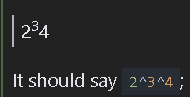
Ah ok. Well that was my only confusion was what you had actually intended to write, not how to interpret it (depending on what you had intended). Yes should be interpreted 2^81.
including Excel
Yeah, but Excel won't let you put in a factorised term either. It's just severely broken because the people who wrote it didn't bother checking the rules of Maths first. Programmers not knowing the rules of Maths doesn't mean Maths is ambiguous (it certainly creates a lot of confusion though!).
We have a standard because it’s ambiguous. If there was only one way to do it, we’d just do that,
Disagree. There is one way to do it - follow the rules of Maths. That's why they exist. The order of operations rules are at least 400 years old, and make it not ambiguous. If people aren't obeying the rules then they're just wrong - that doesn't make it ambiguous. It's like saying if e-calcs started saying 1+1=3 then that must mean 1+1 is ambiguous. It might create confusion, but it doesn't mean the Maths is ambiguous.
the difference in implicit vs explicit? It’s the same operation
"implicit multiplication" isn't even a real thing in Maths, and isn't even multiplication to begin with - people use that umbrella term to either mean The Distributive Law - which is the first step is solving Brackets - or Terms, which are products, which is the result of a multiplication.
e.g. if a=2 and b=3, then...
axb=2x3 - 2 terms
ab=6 - 1 term
Multiplication comes first, then division
They can be done in either order, or even together, as long as you go left to right.
Division is usually written in fractions
Division and fractions aren't the same thing.
fractions which has an implied set of parenthesis
Fractions are explicitly Terms. Terms are separated by operators (such as division) and joined by grouping symbols (such as a fraction bar), so 1÷2 is 2 terms, but ½ is 1 term.
8/2(2+2) could be rewritten as 8×1/2×(2+2)
No, it can't. 2(2+2) is 1 term, in the denominator. When you added the multiply you broke it into 2 terms, and sent the (2+2) into the numerator, thus leading to a different answer. 8/2(2+2)=1.
I'm building up quite a collection of these, so far from being a once-off issue. In other words, still looking for any ideas on how to fix this
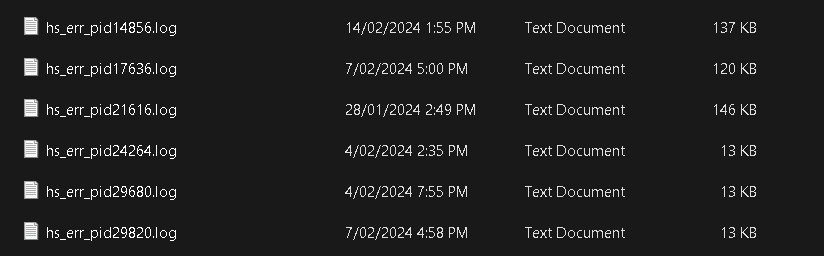
Are you talking about the lack of indentation? I don't know why it does that. I tried using with the same result. I'd fix it if I knew how!
Well, I just had an issue then here with and eventually found backslash worked - I'll give that a go (not sure if I already tried it before).
1/2x is also unambiguous. 2a=(2xa) by definition. Has done for at least 180 years. Terms